
Storycomic Weekly Newsletter: August 29th
ALWAYS POSTED A WEEK EARLIER ON PATREON

🚨 Storycomic Patreon Update for Creators 🚨
If you're an author, indie comic creator, game designer, or storyteller looking for more visibility, the Storycomic Patreon is one of the easiest ways to get your work in front of a growing audience.
For just $5 a month (about the price of a cup of coffee), you get some real promotional benefits:
🎙 Front-of-the-Line Recording Access
I’m often booking podcast interviews three months in advance, but Patreon members jump to the front of the line. This is especially helpful if you have a time-sensitive launch, Kickstarter, or new release coming up.
🔗 Permanent Show Notes Promotion
Your website or project link will be included in the show notes of all interviews as long as you’re a member.
📣 Social Media Promotion
We’ll regularly help promote your projects across Storycomic’s social media channels.
And remember, the Storycomic podcast has over 30,000 downloads, so it’s a great way to get your work discovered by readers and fellow creators.
For the cost of a coffee each month, you get promotion, visibility, and priority booking.
If you’re a creative looking to grow your audience, it’s a pretty great deal.
👉 Join us on Patreon and let’s share your story with the world.
Dan Durick returns with The Mechanism of Collapse
In my newest interview, I’m joined again by Vermont author Dan Durick to talk about The Mechanism of Collapse, Book Two of The Tetrad Cycle.
Dan’s series began with The Dark Matter, a genre-bending novel where science fiction, supernatural horror, and conspiracy thriller collide. The story asks what might happen if the darkness between the stars reached down to touch us, pulling characters into secret research, terrifying encounters, and forces that do not want to be understood.
With The Mechanism of Collapse, Dan continues the larger four-book cycle. His website describes The Tetrad Cycle as a series built around universal mysteries, unexplainable experiences, and the philosophical question of what might be behind reality itself.
In our conversation, Dan talks about returning to this world, writing Book Two, escalating a conspiracy, and grounding cosmic horror in recognizable human fear. We also discuss how his background in philosophy, his fascination with unexplained phenomena, and his Vermont writing life all feed into the strange, paranoid, and contemplative atmosphere of the series.
For readers who like sci-fi horror, cosmic mystery, and stories that leave you questioning what is real, this is a great conversation.

Maggie Tokuda-Hall talks snow monkeys, haiku, and cozy picture book storytelling
In my newest interview, I’m joined by Maggie Tokuda-Hall, author of Love in the Library, Also an Octopus, The Mermaid, the Witch and the Sea, Squad, and The Worst Ronin.
Her newest picture book is Bathtime for Snow Monkeys, illustrated by Yas Imamura and published by Candlewick. The book is a 32-page picture book for ages 4–8, on sale October 13, 2026.
Set at Jigokudani monkey park in Nagano, Japan, the story introduces readers to nihonzaru, or Japanese macaques, who gather in an onsen to relax, snack, and huddle together in the snow. Maggie’s narration is written entirely in haiku form, creating a gentle gateway to poetry for young readers.
In our conversation, we talk about writing picture books with quietness and warmth, using haiku as structure, working again with illustrator Yas Imamura after Love in the Library, and why a playful baby monkey in a hot spring can become a story about family, togetherness, and feeling safe.
For families, teachers, librarians, and young readers who love animals, poetry, and cozy read-alouds, this is a beautiful conversation.

Richard Dansky on Wraith, horror, game writing, and creative survival
In my newest interview, I’m joined by Richard Dansky, a writer whose career spans tabletop roleplaying games, horror fiction, video games, and comics.
Many longtime RPG fans first encountered Richard through his White Wolf work, especially Wraith: The Oblivion, one of the most haunting games in the World of Darkness line. Richard’s official bio also lists him as developer of Wraith: The Oblivion 20th Anniversary Edition.
His career later expanded deeply into video games, where he contributed to more than 40 titles, including Ghost Recon, Might & Magic, Splinter Cell, Far Cry, Rainbow Six, and The Division 2. In 2026, Richard received the inaugural Lifetime Achievement Award from the IGDA Game Writing SIG, recognizing his long influence on the craft and community of game writing.
That makes this a perfect time to talk about his new nonfiction book, The Video Game Writer’s Guide to Surviving an Industry That Hates You, along with his upcoming horror novel Nightmare Logic and graphic novel Bridgewater.
We talk about ghosts, dread, player agency, industry survival, project cancellations, horror, and what Richard has learned from decades of writing worlds that players and readers can step inside.

Sean Rubin celebrates 40 years of Redwall with a new collector’s edition
In my newest interview, I’m joined by Sean Rubin, series artist and longtime fan of Brian Jacques’ beloved fantasy world, to talk about Redwall: The Collector’s Edition, on sale October 13, 2026.
For 40 years, Redwall has held a special place in children’s fantasy. Readers remember the Abbey, the songs, the feasts, the battles, the riddles, the heroes, the villains, and the feeling that courage can come from even the smallest creatures. It is one of those series that becomes part of a reader’s inner landscape.
This new clothbound collector’s edition celebrates that legacy with a keepsake design featuring foil stamping, gilded edges, and never-before-seen material. It also includes a foreword from longtime series editor Patti Gauch, offering a behind-the-scenes look at the history, fans, art, and process of making Redwall.
In our conversation, Sean talks about what it means to create art for a world so many readers already love, how he approaches Brian Jacques’ characters visually, and why Redwall continues to speak to new generations.
For longtime fans, collectors, librarians, teachers, and families, this is a wonderful celebration of a fantasy classic.

Project Update: Getting Back Into Fate Core
This week, I’ve been continuing to run more Fate Core adventures with the kiddos, which has been a great way to get back into the rhythm of the system.
I’ve also been testing out some different Fate Core supplements and experimenting with a few ideas built around 1980s-era IPs. Playing with those settings has been a fun way to stretch the system a little and remind myself what works well mechanically.
The more I play and experiment, the more comfortable I am getting with Fate Core again. That is exactly what I was hoping for, since the goal is to get myself fully back into the swing of things before I dive deeper into re-editing Appliance.
For now, I’m learning by playing—and having a pretty good time doing it.
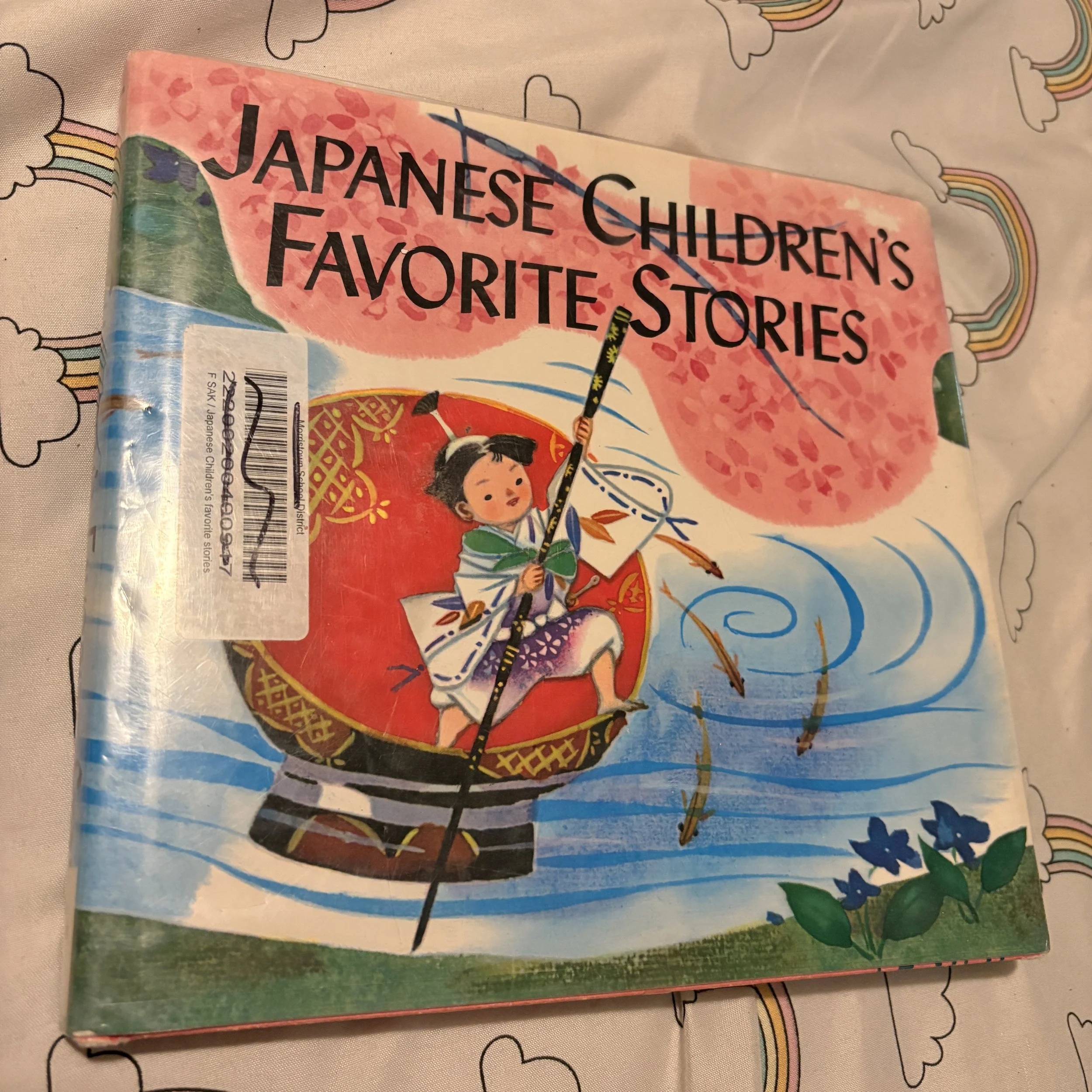
Book Review: Japanese Children’s Favorite Stories by Florence Sakade
For the past month or so, I have been reading Japanese Children’s Favorite Stories with my six-year-old at bedtime, and it turned out to be a wonderful book to share together.
The collection brings together twenty traditional Japanese stories, and one of the things that made it work so well for bedtime was the length. Most of the stories are short enough to finish in one sitting, which is perfect when you are trying to squeeze in “just one more” story before lights out.
Of course, “just one more” has a way of becoming two.
The stories themselves are a delightful mix of adventure, humor, magic, and lessons about kindness, cleverness, greed, gratitude, and sometimes simply what happens when somebody makes a very bad decision.
Some of our favorites included “Peach Boy,” with its classic adventure of a boy setting out to face ogres, and “The Magic Teakettle,” which is exactly the sort of wonderfully strange folktale that gets a six-year-old asking questions. “The Rabbit in the Moon” has a gentler quality to it, while stories such as “Little One-Inch” capture that great folktale idea that being small does not mean you cannot accomplish something big.
There are also stories with wonderfully memorable titles like “The Toothpick Warriors,” “The Tongue-Cut Sparrow,” and “Why the Jellyfish Has No Bones.” Part of the fun was never quite knowing what kind of story we were going to get when we turned the page.
I also appreciated Yoshisuke Kurosaki’s illustrations. They give the collection a distinctive feel and helped make the stories even more interesting for a young listener. With bedtime reading, pictures matter. They become part of the conversation, particularly when your reading companion is six and has plenty of observations of their own.
What I enjoyed most, though, was simply sharing the stories together.
There is something very special about bedtime reading. The books themselves eventually go back on the shelf, but the routine of sitting together, choosing the next story, laughing at the silly parts, and talking about what happened becomes its own memory.
Japanese Children’s Favorite Stories gave us plenty of those moments over the past month.
It was fun, different from many of the other books we normally read, and introduced us to stories that have been told to generations of children in another part of the world. Some were funny, some were strange, some were surprisingly thoughtful, and all of them gave us something to talk about before saying goodnight.
For me, that makes it a pretty successful bedtime book.
Personal Update: A Busy and Productive Week
This was a busy week, but a good one.
We tested out some of our new broadcast equipment during another Bear Ridge broadcast, and I am happy to say that it worked really well. Anytime you bring new equipment into the mix, there is always a little bit of nervousness about how it is going to perform in a real-world setting, so it was encouraging to see everything work the way we hoped.
We are also continuing to run our APEX system overnight to see how it performs over longer stretches. So far, things are looking promising, and it feels like we are getting closer and closer to having the new broadcast setup where we want it.
The paper and the radio are both going really well right now, which is always nice to be able to say.
On the family side, we also had the kids' birthday party on Saturday, and that was a lot of fun. After spending so much time getting the property cleaned up and ready, it was great to finally enjoy the day and watch everyone have a good time.
Overall, it was one of those weeks where there was a lot going on, but most of it was positive. Between the radio equipment, the APEX testing, the paper, and the birthday party, I definitely stayed busy—but it was the good kind of busy.
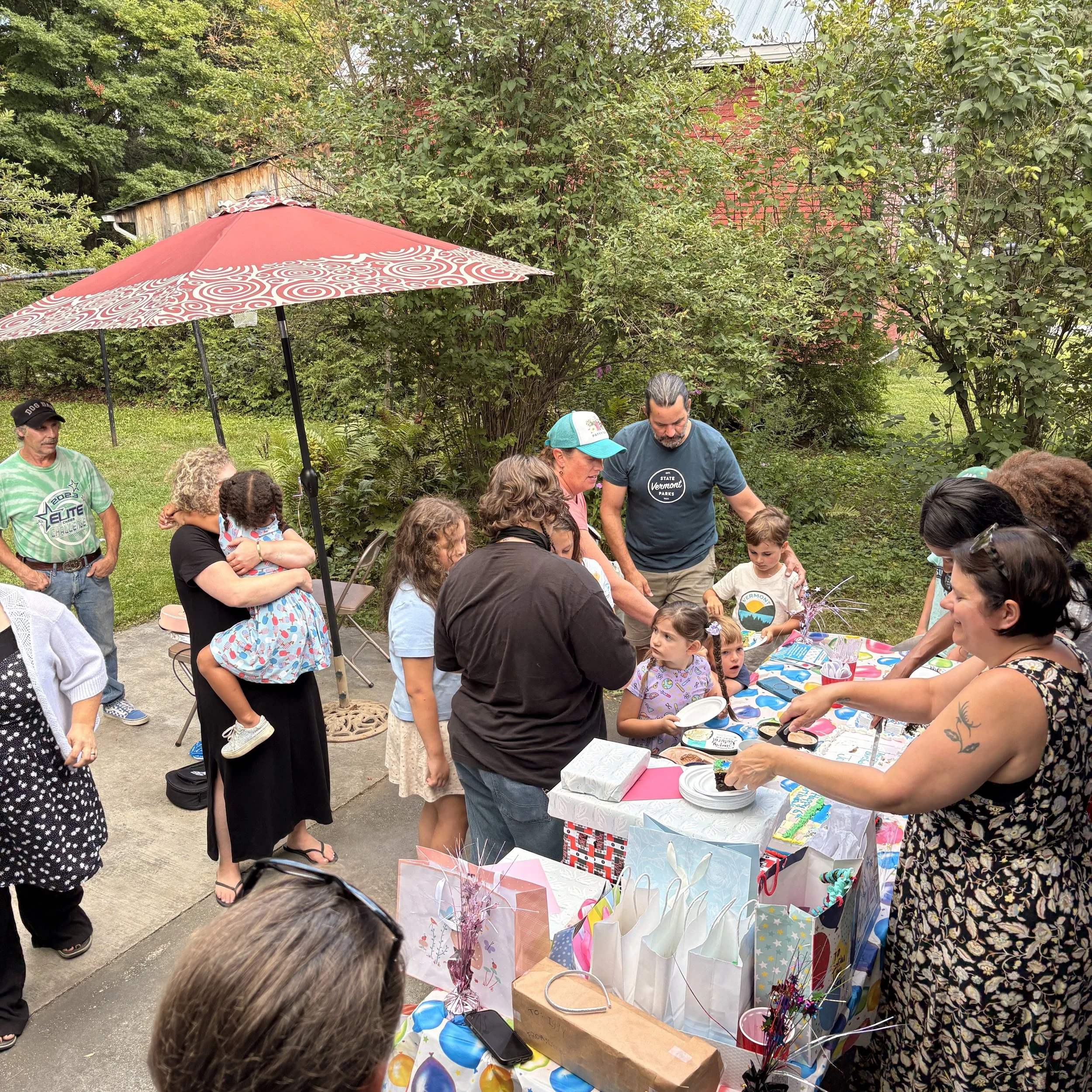
Birthday Party!
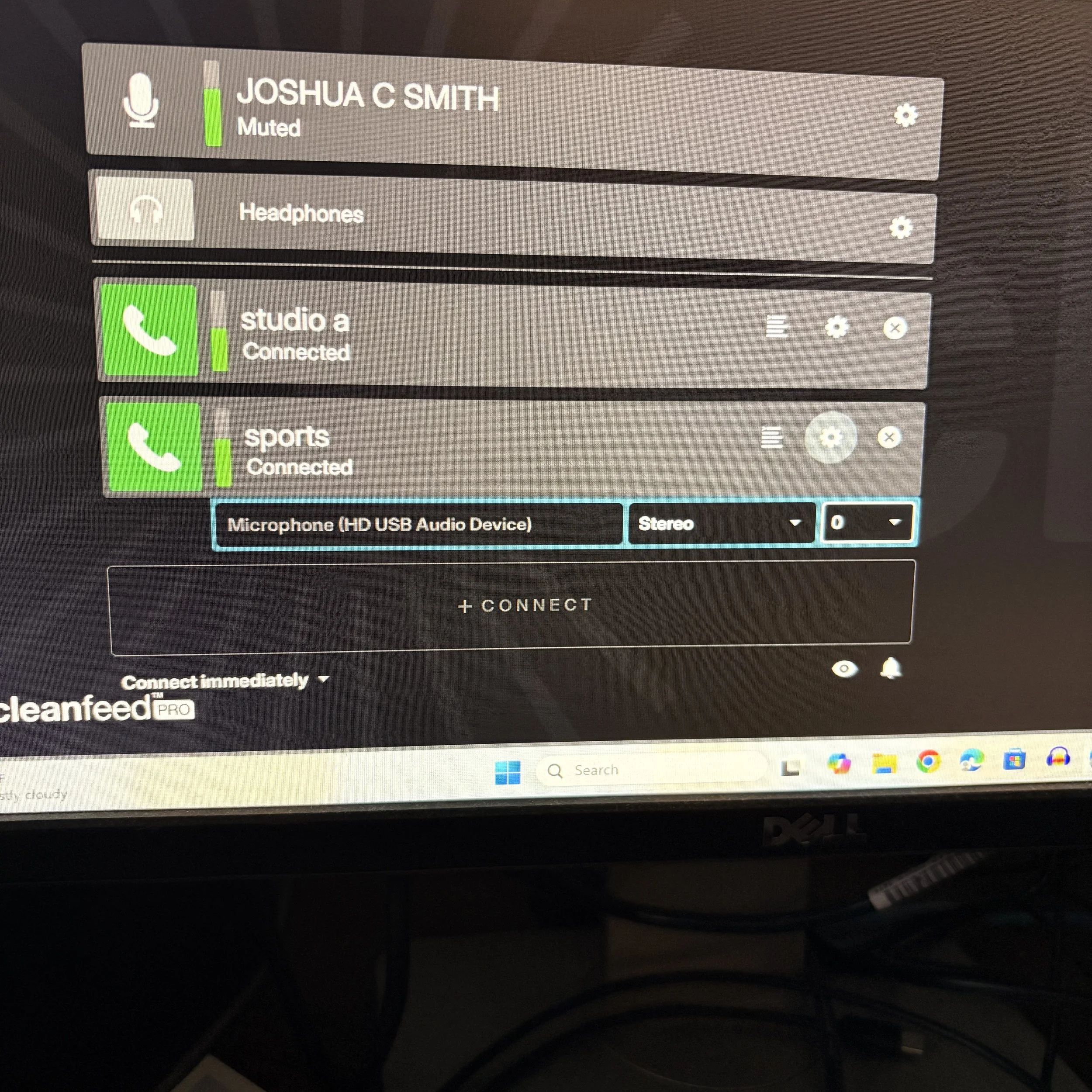
Our new software!